
Abstract
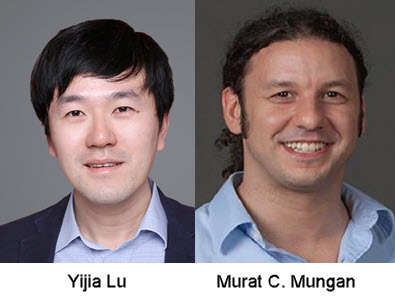
Excerpted From: Yijia Lu and Murat C. Mungan, Contagious Discrimination: Why Race-Blind Justice In Courtrooms Is Not Enough, 101 NYU L. Rev. Online 82 (March, 2026) (133 Footnotes) (Full Document)
 Imagine two suspects who are identical in every respect except their race. They are brought before a prosecutor for plea-bargaining. In a perfectly impartial world, where prosecutors and judges are completely blind to race, the two identical suspects face the same plea-bargain process and expect the same outcome since they are assumed to be identical but for their race, which is not observable to the prosecutor and the judge. Building on this reasoning, scholars and policymakers often support reforms such as implicit-bias training, and laws that ban the use of information such as prior convictions, ethnic origin, and so on in hopes that eliminating access to potentially prejudicial data will reduce discrimination.
But this line of reasoning misses something crucial: Even when courts and prosecutors are race-blind, discrimination outside the courtroom can still affect bargaining outcomes within. If, for example, police disproportionately arrest minority defendants--as patterns widely documented across jurisdictions suggest5--minority individuals in plea negotiations will hold worse “outside options”--what they expect to receive if plea negotiations fail. And because bargaining outcomes depend on outside options--what awaits the defendant if negotiations break down--individuals with worse outside options are more likely to accept worse plea-bargaining outcomes. Therefore, disparate impact may persist despite the complete impartiality of prosecutors and judges. In this sense, discrimination is contagious--it can permeate from one institution to another, even when the latter operates with complete impartiality.
Discrimination undermines fundamental principles of justice, denying individuals opportunities and resources based on their membership in a particular group instead of individual merit. Discrimination has been frequently observed in the hiring process, wages, housing, education, healthcare, and the criminal justice system. Legal philosophers argue that discrimination is wrongful because it demeans individuals and inflicts social stigmas on individuals and their groups. Researchers have identified various social harms of discrimination. First and foremost, discrimination insults, hurts, and stigmatizes disfavored groups, making them feel inferior and angry and potentially leading to violence. Discrimination has been found to severely affect the mental health of its victims. Discrimination is also harmful to society in multiple ways. First, as an economic matter, discrimination in the labor market has been found to result in a reduction in aspirations, energy, and productivity. Second, differences in wages for jobs of comparable worth distort economic decisions and result in social inefficiency. More generally, when discrimination is widespread, it can lead discriminated individuals to accept limiting roles that constrain their flourishing, resulting in lost productivity. Research has shown that discrimination can also lead to disharmony and social violence, as well as increases in crime rates.
Recognizing and understanding contagious discrimination is thus crucial. Policymakers should recognize that downstream courtroom reforms alone--for example, debiasing trainings for prosecutors or judges--are insufficient. Because discriminatory practices by police or other upstream actors can cascade through the system, eliminating downstream disparities requires attention to upstream bias. Addressing bias at its source is therefore crucial, and in some cases, tackling upstream discrimination may also be more cost-effective than piecemeal reforms further along the chain.
This Essay also advances the broader social-scientific study of discrimination. Economists typically emphasize two mechanisms: ““taste-based discrimination,” in which decision makers harbor preferences against a group, and “statistical discrimination,” in which they rely on group characteristics as proxies for unobservable traits such as productivity. Both approaches assume that discrimination originates with the actor who directly observes the protected characteristic. Our theory demonstrates something different: discrimination can persist even when these downstream actors do not observe race, gender, or religion at all.
Our theory also departs from recent work by prominent sociologists who urged economists to move beyond individual-level analysis toward institutional or organizational discrimination. While our theory responds to their call, it remains distinct from organizational or institutional discrimination that sociologists have already carefully studied. Rather than focusing on institutions and laws that perpetuate existing disparities, our theory highlights a new mechanism by which discrimination can spread across different institutions.
Part I reviews existing theories of discrimination in economics and sociology, including taste-based, statistical, and organizational discrimination. It concludes by highlighting the novelty of our theory in contrast to existing theories. Part II introduces our new theory of contagious discrimination through a simple illustration using job search as a motivating example, demonstrating that the phenomenon of contagious discrimination can occur in various institutional settings. Part III develops a more complex model of contagious discrimination in the criminal justice system, focusing particularly on the plea-bargaining process and showing how discriminatory conduct by the police can influence the plea-bargaining process, even when prosecutors and judges are race-blind. Part IV discusses the implications uncovered by our new theory of discrimination for policymakers in criminal justice, emphasizing the importance of (1) ensuring that defendants do not hold incorrect perceptions of police discrimination and (2) avoiding evaluations of police officers based on the final case dispositions of their arrest decisions. We discuss potential reforms in plea-bargaining to facilitate cooperative bargaining between prosecutors and defense lawyers and to reduce opacity in the system by creating a transparent sentence reduction standard to limit prosecutorial discretion.
[. . .]
Given the pervasive harms of discrimination, developing theories to understand its causes and exacerbating factors is an important first step in designing policies to eliminate it. Existing theories have been highly influential, with much thought going into testing and identifying the different forms of discrimination in specific settings. None of the theories, to our knowledge, examines the interaction of different institutional players. This Essay introduces a novel theory to fill this gap. In a setting of repeated interactions, our theory demonstrates that outside discrimination can creep into an otherwise discrimination-free decision process.
An important implication of our theory is that when there are multiple interacting parts within a system in which discrimination can take place, targeting a particular level of the system to reduce discrimination may be insufficient. Just as medical treatment often targets the cause of a disease instead of or in addition to its symptoms, our theory of contagious discrimination suggests that identifying the cause of discrimination and reducing it at its source may sometimes provide greater social returns.
Assistant Professor of Law, Antonin Scalia Law School, George Mason University; Ph.D., Yale University, Department of Economics; J.D., Stanford University School of Law; M.A., Yale University, Department of Economics.
Professor of Law, Courtesy Professor of Economics, and Director of the Law & Economics Program, Texas A&M University School of Law; Ph.D., Boston College, Department of Economics; J.D., George Mason University School of Law; M.A., Boston College, Department of Economics.