
Abstract
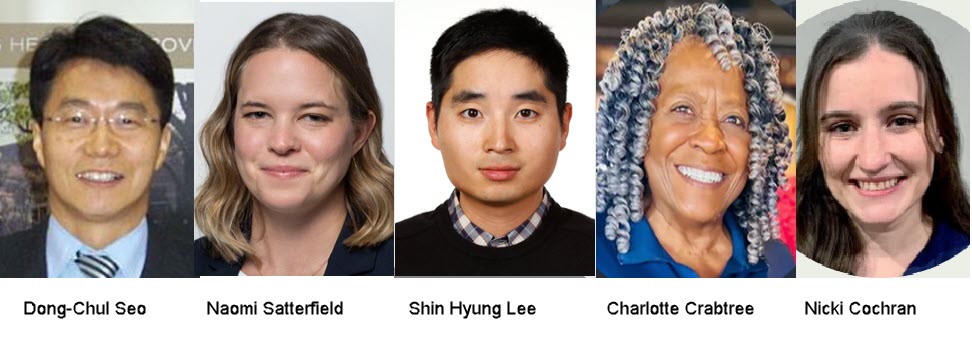
Excerpted From: Dong-Chul Seo, Naomi Satterfield, Shin Hyung Lee, Charlotte Crabtree and Nicki Cochran, "We Playin' Chess But You Give Me a Checker Piece": A Portrait of Structural Racism Ingrained in Overdose Good Samaritan Laws Through Semi-Structured Interviews, 54 Journal of Law, Medicine & Ethics 206 (Summer, 2026) (86 Footnotes) (Full Document)
 Since 2010, the rise in opioid overdose mortality among Black individuals has outpaced that of their non-Hispanic White counterparts.1 These disparate trends in mortality reflect the presence of structural racism in addiction treatment and policy and demonstrate the importance of public health interventions that take it into account.2 To explore this trend, we combine our study of 50 interviews with Black residents of Indianapolis, Indiana with an examination of the policies that impact the environment in which they may witness an overdose. Participant narratives frame our policy analysis by providing insight into why Black residents may or may not call 911 after an overdose event. We explore how current policies around overdose response contribute to participant perceptions by affecting the environment in which overdose occurs, and how policies can be amended to create an environment in which witnesses feel more willing to call 911. We consider the health behavior of calling 911 due to its utility in bringing medical professionals to an overdose event and inclusion in layperson response curricula. Our findings provide insight into the intention to call 911 and how that intention is impacted by negative experiences with and perceptions of law enforcement. Policy change is one factor among many that can increase intention to call 911. Under Indiana's overdose Good Samaritan laws (GSLs), an individual administering naloxone (e.g., Narcan) to a person who has overdosed may be protected from criminal and civil liability. GSLs can reduce consequences related to calling 911 and law enforcement arriving at an overdose event, but in Indiana and many other states, their protections are contingent on a caller meeting several conditions. We examine the role of GSLs in harm reduction and in perpetuating structural racism and explore how all of this is borne out in the lives of Black people impacted by the opioid epidemic in Indiana. We assert that the conditions in Indiana's GSL render its ability to create a protective and intervention-focused environment ineffective in cases wherein the conditions are not adequately met, thereby perpetuating race-based disparities in overdose outcomes. Finally, we provide recommendations for making GSLs more protective, creating an environment in which beneficial encounters with law enforcement are more likely to occur, with the aims of increasing individual perceptions that calling 911 can be more helpful than harmful after an overdose and increasing intentions to engage in that behavior both in Indiana and nationally.
The opioid epidemic claimed 2,682 lives in Indiana3 in 2022, 852 of whom were in Marion County,4 where Indianapolis is located. While overdose mortality nationwide stagnated from 2021 to 2022 and decreased from 2022 to 2023, Black communities experienced a statistically significant increase in both years.5 Through interviews with 50 Black residents of four Indianapolis zip codes, we gain insight into reasons why this may be occurring. With particular interest in health behaviors that bring first responders to the scene, we use the Health Belief Model to analyze the interviews and gain understanding regarding beliefs that may impact participants' intention to call 911 after an overdose. Slow response after a call, lack of care at the scene, and fear of experiencing criminalization and/or police brutality were some of the most salient factors that impacted participants' beliefs about the benefits of and the barriers to calling 911. Interestingly, we observed that experiencing or witnessing a helpful police interaction improved the perception that calling 911 to an overdose could be beneficial, even when participants were still concerned with barriers like criminalization and/or police brutality. We surmise that witnessing helpful encounters with police can increase the intention to call 911 when an overdose occurs, despite existing fear and mistrust in law enforcement overall. When considering ways to increase the chances that police response to an overdose will result in a helpful encounter, we look to how policies around substance use influence the environment in which laypeople choose to respond. Because substance use-related GSLs deal specifically with overdose response, we identified these as key policy factors in fostering an environment in which people may feel better able to call for help.
Passed in 2015 and amended in 2016, Indiana's GSL, also known as Aaron's Law, was created to encourage laypeople to carry and administer naloxone if they witness an overdose and to call first responders for help.6 This policy has been protective; however, it does not fully address barriers to administering naloxone and calling 911 within the Black community, such as fear and mistrust of police.7 This example highlights how harm reduction policies can perpetuate racial disparities in health outcomes among people who use drugs. Policies like Aaron's Law's current iteration, that limit who is protected and lean on police discretion, can disadvantage Black communities, whose residents are less likely to be covered by the GSL. In the following analysis, we find that witnessing police brutality or perceiving it as a likely outcome of police interaction may negatively impact intent to call 911 for help, while witnessing a helpful and positive police interaction can increase the perceived benefits of calling 911 after an overdose. These findings can help attorneys, public health professionals, and advocates understand how systemic racism in drug policy, even in harm reduction policies, can result in disparate health outcomes in Black communities, and how strategic changes can improve those outcomes. We draw a connection from policy and law to the environment and context where an overdose occurs, and then to individual health behaviors. We conclude with policy recommendations that increase the protections afforded by Aaron's Law in light of the "racialization and hypercriminalization of Black people"8 within drug policies and the criminal justice system.
[ . . . ]
The intersection of slow, unhelpful, or risky police response after an overdose and historic overpolicing of Black individuals61 come together into the belief that police don't see their role in Black communities as one of protection but of enforcement.62 This sentiment is shared broadly in communities with similar demographics,63 punctuating the strained relationship between law enforcement and minority communities64 and its impact on the decision to call 911 after an overdose. The effect incidents of race-based police brutality have on individual decisions is reflected in a study examining the impact of the police beating of Frank Jude, an unarmed Black man in Milwaukee, Wisconsin. The authors found that this event significantly reduced the number of calls to 911 from Black citizens for about a year.65 Lopez et al. noted that "historical experiences and current fear of enforcement ... [intersect] with feeling less protected by the harm reduction infrastructure."66 This feeling, while held by the individual, scaffolds community perceptions of law enforcement. Its influence on the desire to call 911 can have life-threatening implications on people experiencing an opioid overdose. The reluctance to call 911, thus risking a punitive police response, is not unwarranted. Structural racism's presence in policing is well documented. Black people experience higher rates of incarceration for drug-related activities,67 are more likely to have fatal interactions with police,68 and make up a disproportionately large percentage of people on parole or probation.69 Nationwide, police tend to see Black over-dose victims as less deserving of aid when compared to their White counterparts.70 It is necessary to take structural racism's manifestations in criminal legal institutions and in former and current drug policy into account when examining health disparities because it is often a contributing factor.71 The fear and mistrust related to histories of racism in the criminal legal system are supported by the narrations of our participants. Many felt that police were uninterested in rendering aid and described fear that they would be mistreated if police found them at an overdose event. Participants also expressed unwillingness to call 911 after an overdose, linking this to their assumption that police would arrive and that there were few benefits and significant barriers that could result from the call.
Promisingly, some interviews demonstrate that positive encounters with law enforcement were influential in appraisals of the high benefits to calling 911. The expectation that aid would be rendered effectively appears to be powerful, especially after seeing it occur or knowing someone who experienced a benefit. In some cases, people who described high barriers and/or negative perceptions were willing to call anyway, largely because of this. We cannot erase a deep history of violence, nor can we ask people who come from legacies of oppression to simply forget all of it. However, we can foster an environment in which helpful and restorative police interactions are more likely to occur. This reflects the independent nature of perceived benefits and perceived barriers:72 even while the barriers are high, increasing benefits can encourage laypeople to dial 911 despite the risk, because the reward of a saved life might be greater.
Policy changes are an important step in fostering a more hopeful environment. Per Frieden's Health Impact Pyramid, policy changes have been one of the most wide-reaching impacts on the improvement of health outcomes.73 Clear policies that protect lay responders can create accountability for law enforcement, hopefully leading to actions that are lifesaving and focused on protection rather than punitive enforcement. Policy may influence individual actions of police, which have great bearing on how the community perceives them and their behaviors based on those perceptions. A study in New Haven, CT, provides support for the positive impact of nonenforcement police encounters wherein officers focus on communicating with residents with the goal of community improvement. The authors found that these encounters improved attitudes towards police, willingness to work with police, and perceived legitimacy. This effect was particularly large among Black participants and participants who held negative views of police prior to the intervention.74 A later study that examined the relationship between perceived legitimacy of police and willingness to call found that this willingness, in the case of serious issues, was positively related to perceptions of trust and value alignment.75 Additionally, this path is supported by Hamilton et al., who found that the passage of GSLs that protected people at an overdose scene from arrest was correlated with a 7% reduction in overdose deaths two years later.76 They believed that this was because the legal context contributed to police encounters focused on medical assistance. These studies support the idea that improved perceptions of police, particularly through encounters in which police are supportive, can increase the likelihood of someone calling 911 after an overdose. Applying the Health Belief Model framework, this might be because of an increase in the belief that calling 911 and having police respond to an overdose event is beneficial.77
Indiana is one example of a state where GSLs can be strengthened to provide increased equity of the protections they provide. Because Black individuals are more vulnerable to discretionary law enforcement practices that tend towards criminalization78 and are more likely to be on parole or probation,79 policies that vaguely require cooperation with police and do not protect against technical violations perpetuate racial disparities in opioid overdose deaths by increasing risk in an overdose environment. Eliminating narrow parameters and supplying clear language around the restorative mission of overdose response and protections afforded people at the scene can direct police to prioritize aid and hold them accountable rather than placing vague burdens of compliance on lay responders. Removing the exclusion of protection for people on parole or probation reduces the chances that a caller would be charged with a crime after assisting at an overdose scene, making GSL protections more equitable across communities that experience high rates of criminalization. Eliminating the chances of arrest altogether is preferred, offering witnesses a chance to see how emergency responders can help and potentially making them more likely to call 911 in the future.
Policy Recommendations
The strongest GSLs make it clear that, after calling 911, Good Samaritans and the overdose victim are not in violation of substance use-related laws or probation/parole violations,80 making legal protection the rule rather than the exception81 so that there is no ambiguity for law enforcement who arrive at a scene. As such, we echo calls from others in recommending that policy makers widen the criteria for protection of GSLs by eliminating exceptions to protection, such as quantities of illegal substances in possession of the caller/victim, limits on the number of calls one can make and remain eligible,82 and requirements such as administering naloxone, compliance, and answering police questions. We recommend that GSLs include protection from probation/parole violations83 and protect the caller and victim from arrest rather than just charge, prosecution, or sentencing mitigation.84 We also assert that GSLs related to overdoses should be uniform across the country.85 As such, their implementation could benefit from them becoming a federal policy.
Policies written with reflexivity and the reality of structural racism in mind can disrupt racial disparities and ensure the purposes of GSLs are enacted.86 These changes have the power to improve the environment in which 911 is needed so that individuals who overdose are more likely to receive help and witness police interactions that demonstrate protection and care rather than criminalization and fear. Over time, beliefs around calling 911 may change, with perceived benefits increasing and perceived barriers decreasing, potentially increasing the likelihood that 911 will be called after an overdose and the victim will survive. We believe these changes can address the increasing overdose fatality rates and reduce the incidence of opioid overdose deaths in the Black community.
Research Recommendations
While our policy and empirical analysis support much of our argument, part of this work leans on inference and logical steps through areas where there are significant gaps in the literature and that our data did not directly address. There is little but emerging literature on the impact of GSL ambiguities on attitudes towards police interaction and calling 911 after an overdose. There is less work regarding GSL specificities and changes that improve outlook and willingness to call 911. We call for future studies to examine citizens' impressions of GSLs and the extent of their protection, both to assess how GSL parameters impact citizens' intentions to call 911 and to elicit ideas for legislative change that could increase their willingness. We also call for legal epidemiological approaches to harm reduction policies that take structural racism into account. Legal mapping and quasi-experimental evaluation of GSLs that attend to their variations across the United States may lend insight into strategies that can ameliorate race-based disparities, as can continuous and improved surveillance of harm reduction policies. Qualitative approaches can give researchers an increased and nuanced understanding of how GSLs impact individuals and provide direction for policy change. Finally, examining the precedence set in cases in which GSLs provided protection or in which they were used in legal proceedings and making that information available to both legal teams and harm reduction agencies would be useful in empowering and protecting would-be lay responders.
Beyond This Scope
Our recommendations for policy reform are a product of the institutions and resources currently available. However, we hope for a different future. We believe that legal response to an overdose, which is primarily a medical event, is not always appropriate. Given the medical needs and the valid mistrust of law enforcement following an overdose, we call for interventions that use police involvement as a last resort. For example, emerging interventions, such as 988 for mental health crisis response and overdose response teams equipped to address medical and mental health challenges as well as engage in compassionate de-escalation, offer critical and swift responses that center care rather than enforcement. Sustainable and wide-reaching efforts to reduce race-based disparities and address inequities brought on by racism and stigma must consider and address the structures and institutions that reify them.
Limitations
Qualitative inquiry calls the researcher to consider the built reality of the people who provide their accounts and the communities they belong to. Thus, the results of this study are not generalizable, but focus on joining the voices of people whose experiences of structural racism are not often considered. Most of the authors of this paper have not experienced the legal system in the way our participants do. We acknowledge that our interpretation is influenced by this. Due to our interviewer's proximity to the community and her experience with substance use, we acknowledge that her positionality could also have an impact on the interviews. GSLs vary greatly across the country, and little has been published with empirical evidence on how their many facets impact mortality. As such, we must sometimes lean on inference to draw connections between policy and its impacts on minoritized communities. We are confident in these connections and urge readers to consider the gravity of their reality and the realities of the participants who gifted us their interviews. We recognize that policy alone will not end race-based police violence. Accountability is key and, even then, individual police action may not align. There are broader and deeper needs to address the roots of racism in the United States that will take many more people, papers, partnerships, and beyond to heal.
Supplementary material. The supplementary material for this article can be found at http://doi.org/10.1017/jme.2026.10244.
Acknowledgements. This work would not be possible without Overdose Lifeline (ODL). ODL was founded in 2014 with a key mission of increasing access to the overdose reversal drug naloxone which at the time required a prescription. With assistance from ODL, the Multi-Sector and Multi-Level Community-Driven Approaches to Remove Structural Racism and Overdose Deaths in Black Indianapolis Communities (MACRO-B) Project distributed a total of 95,000+ naloxone (Narcan) units and 55,000 fentanyl test strips; installed 40 NaloxBoxes; and, most importantly, reduced overdose deaths by 45% among Black residents in the target Indianapolis communities within two years of the project.
We are grateful to our participants for taking the time to share their stories, especially considering the sensitive nature of this topic. We are also appreciative of the MACRO-B coalition members, who drive this work and hold us and our inquiry accountable. Thank you to the Indiana Department of Correction's Data Science and Analytics Department for their cooperation. We are grateful to Dr. Rachel Tin for her guidance of this paper. Finally, we would like to acknowledge the people whose lives have been cut short or harmed because of structural racism in our justice system. We can do this work because their sacrifice is bringing attention to how far we still have to go.
Funding. This MACRO-B Project is supported by the Office of Minority Health (OMH) of the U.S. Department of Health and Human Services (HHS) as part of a financial assistance award (CPIMP221346) funded to Dr. Seo by the OMH/OASH/HHS. The contents are those of the authors and do not necessarily represent the official views of, nor an endorsement, by OMH/OASH/HHS, or the U.S. Government. For more information, please visit https://www.minorityhealth.hhs.gov/.
Disclosures. The authors disclosed receipt of the following financial support for the research, authorship, and/or publication of this article: This work was supported by the Office of Minority Health (OMH) of the US Department of Health and Human Services (HHS) as part of a financial assistance award (grant number CPIMP221346).
Dong-Chul Seo is a tenured Full Professor at Indiana University School of Public Health-Bloomington.
Naomi Satterfield is a doctoral student majoring in Health Behavior at Indiana University School of Public Health-Bloomington.
Shin Hyung Lee is a doctoral student majoring in Health Behavior at Indiana University School of Public Health-Bloomington.
Charlotte Crabtree is Diversity & Outreach Program Manager at Overdose Lifeline, Inc.
Nicki Cochran is Director of Research and Program Evaluation at Overdose Lifeline, Inc.